dental health · reading time 8 min
the best way to clean a small dog's teeth at home
brushing, daily chews, water additives, wipes, and dental diets, ranked for tiny, crowded mouths, and what to combine when one method alone isn't enough.
the short version
- there's no single winner, the best routine combines methods: a daily chew, brushing where tolerated, and a VOHC water additive.
- small dogs pack the same 42 teeth as a large breed into a smaller jaw, so plaque builds up faster and consistency matters more.
- none of these methods remove tartar below the gumline, that still needs a professional cleaning.
- if you can only start one habit, make it a correctly sized daily chew, it's the one small-dog owners actually keep.
what's the best way to clean a dog's teeth at home?
short answerthere isn't one single best method, there's a best combination. pairing a daily dental chew with brushing (even a few times a week) and, where tolerated, a VOHC-accepted water additive controls plaque more reliably than any single tool alone, especially for small dogs whose crowded teeth build up plaque faster than any one method can undo.
search "best way to clean dogs teeth" and you'll get a dozen confident, conflicting answers: brush daily, buy this chew, add that water drop, skip the vet, don't skip the vet. for small dogs the stakes are a little different than for large ones. their teeth crowd, so plaque builds faster, and their mouths often can't handle every method the internet recommends at full strength.
why do small dogs need a different approach?
the same 42 teeth, a fraction of the jaw.
small dogs carry the same 42 adult teeth as a Great Dane, packed into a fraction of the jaw. that crowding traps plaque and speeds up periodontal disease. industry dental research analyzing millions of veterinary records puts extra-small breeds at up to 5x the periodontal-disease risk of giant breeds, so consistency matters more than for a bigger dog. crowding also makes retained baby teeth more common in toy breeds, and a baby tooth that doesn't fall out on schedule can trap plaque right against a permanent one. none of this means a small dog's mouth is fragile, it means the margin for skipping days is smaller.
extra-small breeds (under ~14 lbs) vs. giant breeds (over ~55 lbs), diagnosed periodontal disease. source: Banfield Pet Hospital dental disease study, cited via veterinary dental press.
which method actually works best for a small dog?
ranked by effectiveness, effort, and small-dog fit.
no single method wins outright. a daily chew offers the best effort-to-result ratio for small dogs, brushing is the most thorough per session, and water additives and dental wipes work as low-effort layers on top. the chew is the easiest to start and the easiest to keep.
| method | effectiveness | effort | small-dog fit |
|---|---|---|---|
| daily dental chew | good, on the teeth it reaches | low | best starting point, size it to the mouth |
| brushing | best, reaches all surfaces | medium to high | harder in tiny, anxious mouths, worth the slow build-up |
| VOHC water additive | moderate, controls bacteria | very low | easy add regardless of size |
| dental wipes | moderate, outer surfaces only | medium | useful backup for brushing-averse dogs |
| dental diet | moderate, mild abrasion | low | check kibble size actually fits a small jaw |
the small-dog routine, step by step
ranked, and in the order people actually keep.
- start with a correctly sized daily chew. give one firm, single-ingredient chew a day, sized for a small mouth. it does mechanical plaque removal and asks nothing of a nervous dog.
- layer in brushing where tolerated. introduce a dog-safe toothpaste slowly, a few times a week to start. brushing reaches every surface and remains the most thorough single method.
- add a VOHC water additive. mix a veterinary oral health council-accepted additive into the water bowl to help control oral bacteria between chews and brushing.
- watch for crowding and retained baby teeth. small breeds keep the same 42 adult teeth as large dogs in a fraction of the jaw, so ask your vet to check for crowding and retained deciduous teeth earlier.
- keep professional cleanings on schedule. book the cleaning schedule your vet recommends; it's the only way to remove hardened tartar below the gumline.
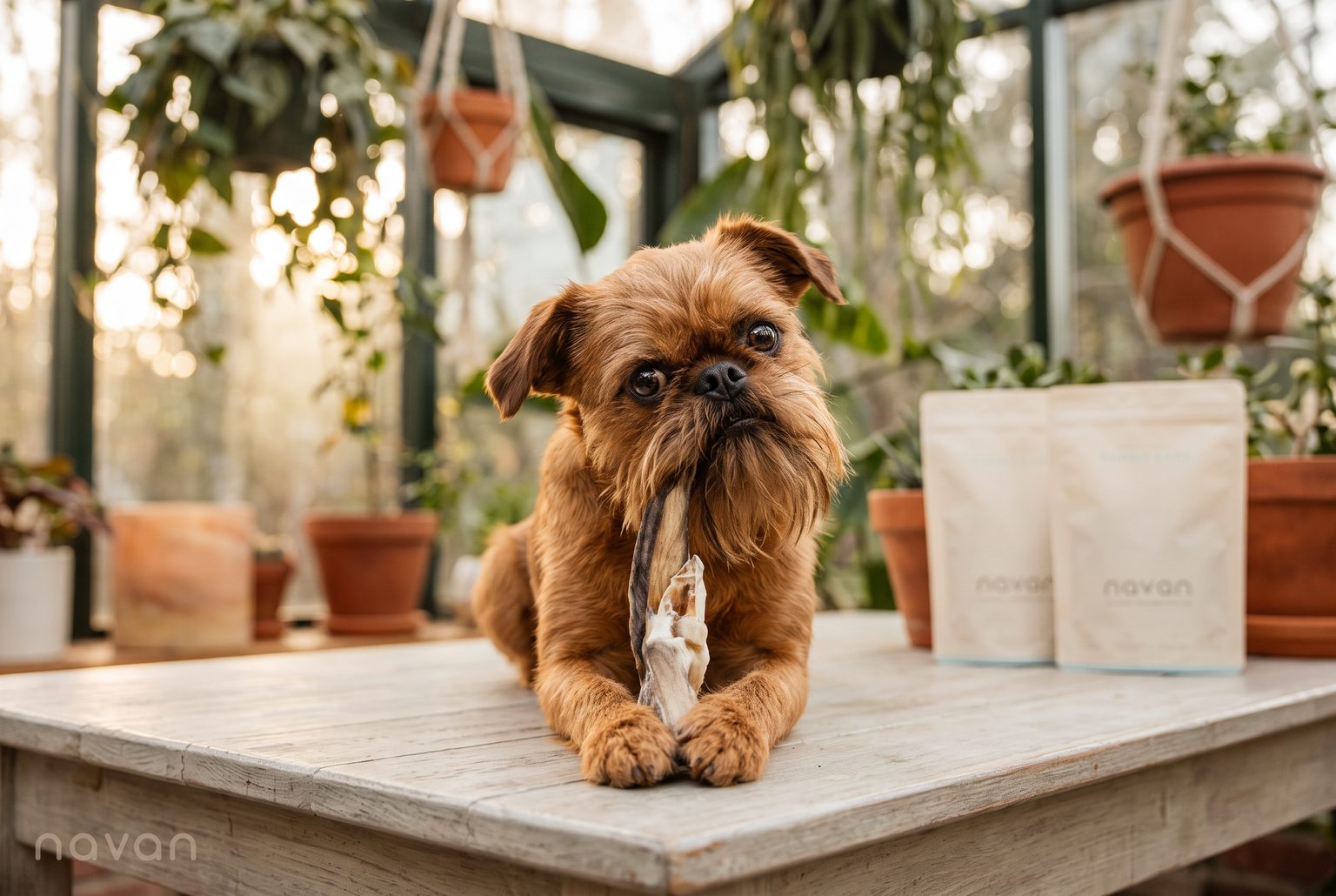
a chew is the one method that doesn't require your dog's cooperation beyond wanting to chew, which most small dogs do happily. pick one sized to the mouth doing the work: a chew built for a 60-pound dog is a choking risk for a 6-pound one. navan's rabbit ear and duck neck are sized for small jaws specifically, one ingredient each, nothing added.
forty-two teeth in a jaw the size of your palm. that is the whole problem.

rabbit ears · 10 day supply
$35 one-time · from $29.75/mo on subscription
add to cart → live from shopify · price & stock always currentthe navan take
asking which method is best produces the wrong answer, because the honest ranking changes depending on who is holding the toothbrush. in a clinical setting, brushing wins and it isn't close. in a real apartment on a wednesday night, with a dog who hates having his muzzle held, the ranking inverts and the best method becomes whichever one still happens. we'd rather be second-best and daily than best and abandoned. that is the whole reason this product exists in the shape it does.
frequently asked
what's the best way to clean a dog's teeth at home?
why do small dogs need a different dental care approach?
which cleaning method actually works best for a small dog?
which method should small dog owners start with?
how often should i clean a small dog's teeth?
what does dog oral cleaning actually include?
not sure where to start?
build your dog's dental protocol in 60 seconds.
answer a few quick questions and we'll match the single-ingredient chews that fit your dog's size, mouth, and needs.
take the dental quiz →sources: Veterinary Oral Health Council, guidance on brushing technique and frequency; American Veterinary Dental College, on the VOHC Seal and home dental care; dvm360, summarizing Banfield Pet Hospital's dental-disease analysis of veterinary records showing extra-small breeds at up to 5x the periodontal-disease risk of giant breeds.
want navan's latest guides and updates to reach you more often? add us as a preferred source on google.
add navan as a preferred source on google