dental health · reading time 5 min
why does my dog's breath smell like fish?
it usually isn't coming from the stomach. fishy breath is one of three things, and the most common has nothing to do with the mouth.
the short version
- fishy dog breath usually isn't coming from the stomach. it's one of three things.
- most common: anal glands. the dog licks the area and the scent travels to its mouth and coat.
- second: dental disease. mouth bacteria give off fishy-smelling sulfur compounds.
- third, and harmless: a fish-based food or fish-oil supplement.
- if it's dental, a daily chew helps. if it's glands or diet, it won't, so pin down the source first.
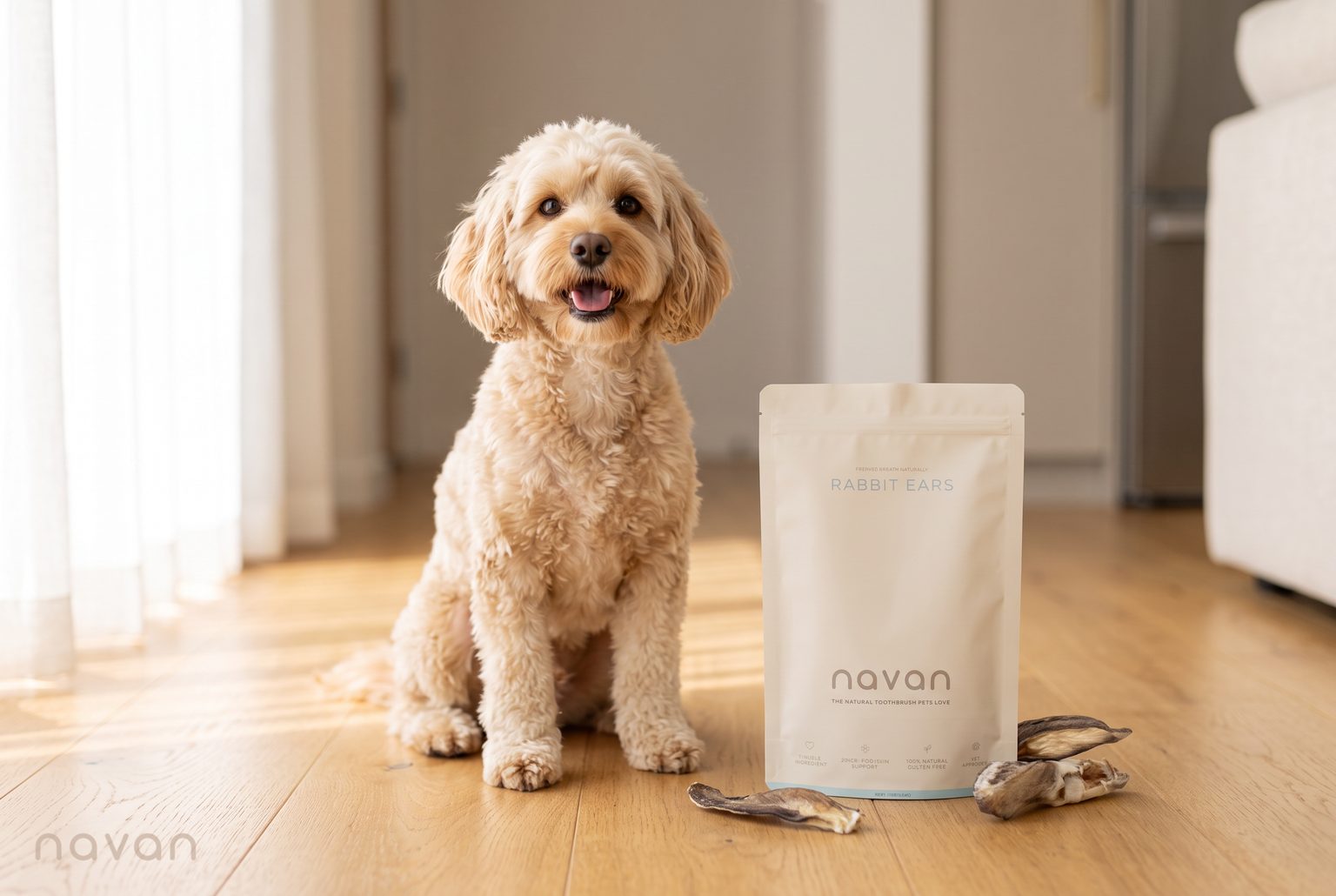
fishy breath alarms people because it's so specific. it almost always traces back to one of three causes, though, and only one of them needs quick attention. the odd part is where the most common one starts: not the mouth.
short answerfishy dog breath comes from one of three things: anal glands (the most common cause, licked and carried to the mouth), dental disease from mouth bacteria, or a fish-based diet. if it's persistent, see a vet.
the three usual sources
in order of how often they're the answer.
anal glands, the surprising usual culprit
1dogs have two small scent glands just inside the rectum. when those glands get full, impacted, or infected, they give off a strong, unmistakably fishy odor. an uncomfortable dog licks the area, and the smell travels straight to its mouth and coat. so "fishy breath" often isn't a breath problem at all. smaller breeds, cocker spaniels, chihuahuas, shih tzus, tend to be more prone. the tell-tale signs: scooting, licking the rear, or a fishy smell that's worse near the tail than the mouth. leave the fix to your vet or groomer.
dental disease
2when the mouth really is the source, the smell comes from bacteria. plaque and tartar build up, and the bacteria on them give off volatile sulfur compounds that can read as fishy or rotten. it's worth taking seriously: more than 80% of dogs have some dental disease by age three, small dogs most of all. if the smell is strongest at the mouth and you can see red gums or yellow-brown tartar, that's your likely cause.
diet & supplements
3the most harmless cause is also the simplest. feed a fish-based food or a fish-oil supplement, and the breath can just smell like fish. if it tracks with meals and nothing else seems off, that's usually all it is.
how to tell which one
narrow the source with the signs, then act on it.
| likely source | other signs | what to do |
|---|---|---|
| anal glands | scooting, licking rear, smell worse near tail | vet or groomer expresses them |
| dental | red gums, tartar, smell at the mouth | daily plaque control + vet cleaning |
| diet | tracks with fish food/oil, no other signs | harmless; adjust if you like |
if the cause is dental, here's the fix
a firm daily chew scrapes plaque before it hardens.
daily chew
one single-ingredient chew, sized for small jaws
scrapes plaque
mechanical friction lifts it before it hardens to tartar
fresher breath
fewer mouth bacteria, less of the fishy sulfur smell
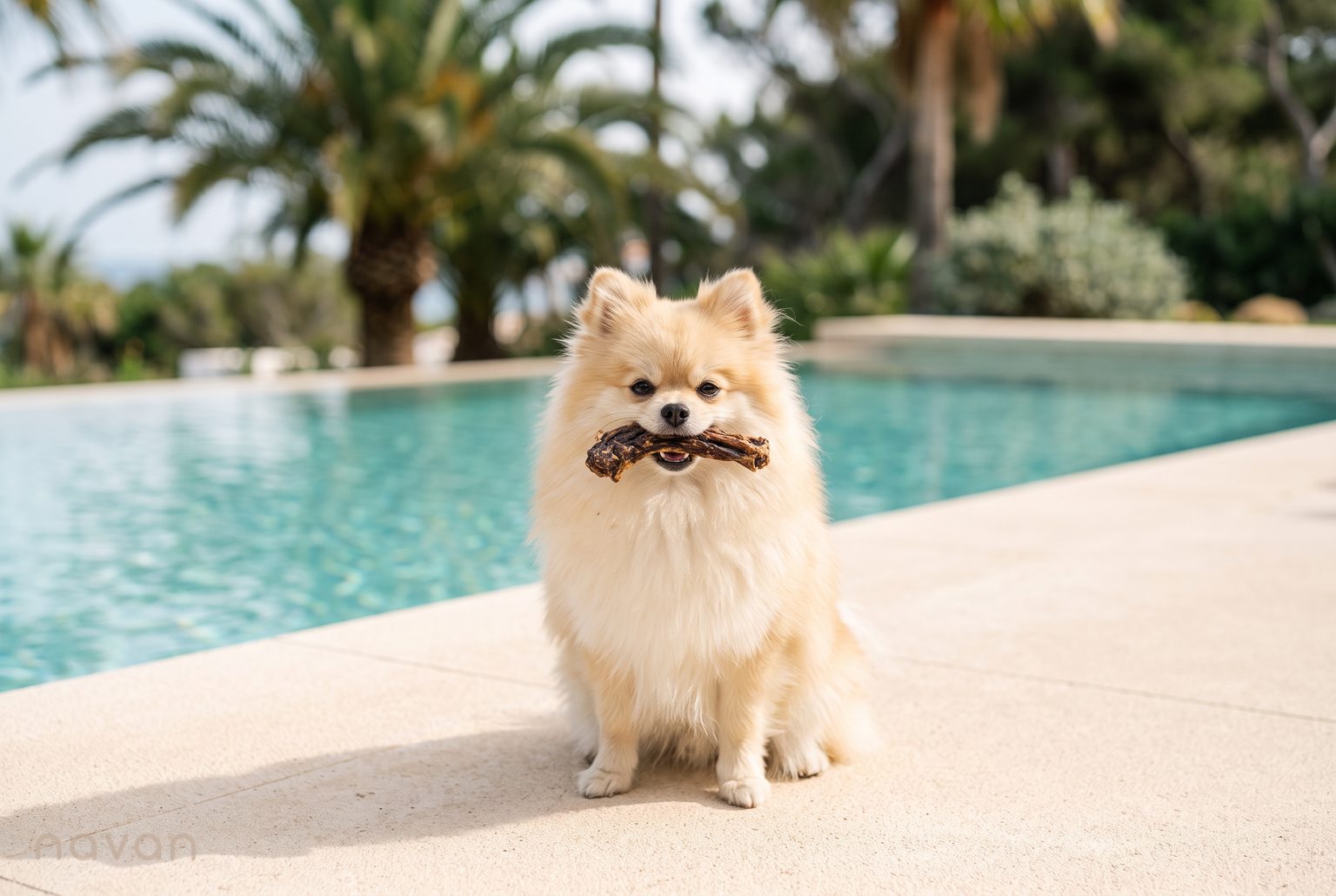
what's actually in it
- 1 ingredient
- 0 glycerin
- 0 starch
- slow air-dried
- whole protein
- for small jaws
a fishy smell is information. the fix depends entirely on where it's coming from.

rabbit ears, 10 day supply
$35 one-time · from $29.75/mo on subscription
add to cart → live from shopify · price & stock always currentthe navan take
breath products mostly sell a cover-up: mint, chlorophyll, a spray. we don't make any of those, because a smell is information and masking it throws the information away. of the three causes on this page, exactly one lives in the mouth, and that one is a plaque problem. plaque stays soft for a day or two before it mineralizes, and that window is the only one anything you do at home works in. a daily chew is a way to keep using it. the other two causes need a vet, and we'd rather say so.
frequently asked
why does my dog's breath smell like fish?
is fishy dog breath serious?
can dental chews help fishy breath?
not sure where to start?
build your dog's dental protocol in 60 seconds.
answer a few quick questions and we'll match the single-ingredient chews that fit your dog's size, mouth, and needs.
take the dental quiz →sources: American Kennel Club (anal glands); PetMD (fishy odor causes); UC Davis School of Veterinary Medicine & VCA (halitosis & oral bacteria); AVMA (periodontal disease in dogs).
want navan's latest guides and updates to reach you more often? add us as a preferred source on google.
add navan as a preferred source on google