ingredients · 5 min read
duck necks for dogs, from the inside out.
a whole, edible chew that works on teeth and joints at once, if you feed the right kind, at the right size, the right way.
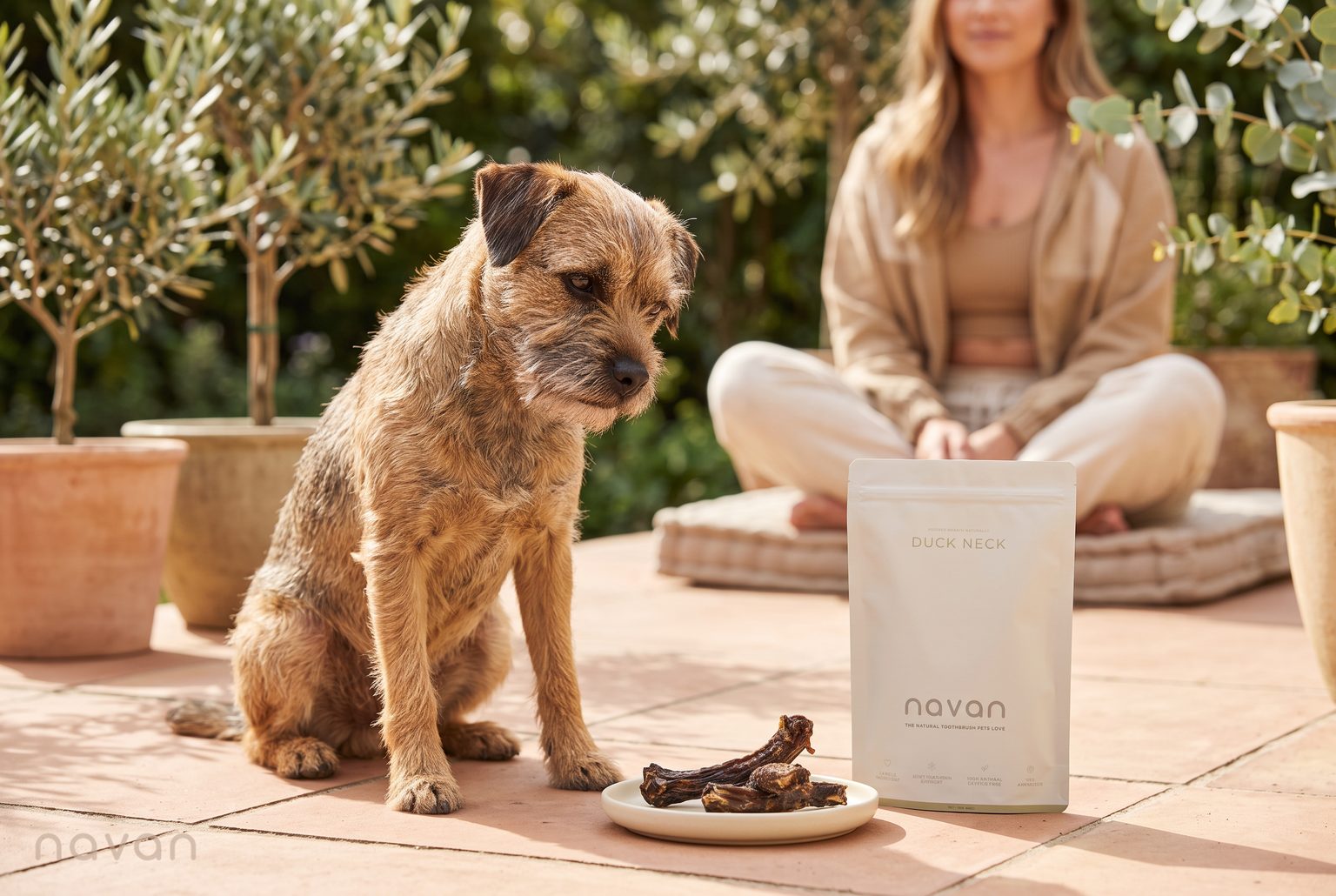
the short version
- a duck neck is a whole single-ingredient chew: edible bone, cartilage, and connective tissue in one part.
- the segmented vertebrae scrape teeth as the dog works down them, lifting soft plaque before it hardens.
- the cartilage carries glucosamine and chondroitin in their natural matrix, a small whole-food joint top-up.
- dehydrated beats raw: the FDA found raw pet food far more contaminated. never feed cooked bone.
- match the size to the dog, always supervise, and feed once or twice a week within about 10% of daily calories.
are duck necks good for dogs?yes. a duck neck is a natural single-ingredient chew that supports dental and joint health. its segmented vertebrae scrape the teeth as the dog works through it, and the cartilage naturally contains glucosamine and chondroitin. feed it sized to the dog, and supervised.
what a duck neck actually does
one part, two jobs, plus a third that owners underrate.
1 · teeth
a scrape, not a slice
the neck is a chain of small vertebrae wrapped in cartilage and skin. that hard-soft texture drags across the tooth and lifts plaque while it's still a soft film, in the days before it hardens into tartar. small dogs feel this most.
2 · joints & 3 · a calmer chew
cartilage, in its natural matrix
cartilage is where glucosamine and chondroitin live, a duck neck carries them whole, not sprayed onto a biscuit. the amount is modest: a small whole-food top-up, not a stand-in for a vet supplement. and a neck takes time, the focused, satisfying chewing that settles a dog. one bone-in chew is often worth three soft treats.

raw, dehydrated, or cooked, which is safest?
gently dehydrated is the safest everyday choice.
| raw | slow-dehydrated | cooked | |
|---|---|---|---|
| bone safety | soft, edible | soft, edible | brittle, can splinter |
| pathogen risk | higher | much lower | low |
| nutrients | intact | largely intact | degraded by heat |
| handling | refrigerate, wash up | shelf-stable | shelf-stable |
how to feed a duck neck safely
a duck neck is only as safe as the way you hand it over.
- match the size to the dog. a neck for a 40-lb dog isn't a neck for an 8-lb dog. small dogs get a smaller piece, taken away sooner.
- always supervise. watch for gulping; take it away once it's small enough to swallow whole.
- start slow. it's rich and bone-in, offer a portion, watch the stool for a day, then settle into a rhythm.
- once or twice a week is plenty for most dogs, within about 10% of daily calories.
- never cooked. cooked poultry bone can splinter. raw or gently dehydrated only, we prefer dehydrated.
bone, cartilage and skin in one piece, and a dog that has to work through all three.

duck neck, 6 day supply
$35 one-time · from $29.75/mo on subscription
add to cart → live from shopify · price & stock always currentthe navan take
selling raw would be easier for us in one way: it's the version raw-feeding customers ask for, and it needs almost no processing. we slow-dry instead, and we lose some of that audience by doing it. the reason is handling, not nutrition. a raw neck turns every serving into a food-safety job for the owner, and most households don't run like a commercial kitchen. drying keeps the edible-bone structure and the segments that do the scraping, and it survives a cupboard.
frequently asked
are duck necks good for dogs?
are raw duck necks safe for dogs?
how often can a dog have a duck neck?
not sure where to start?
build your dog's dental protocol in 60 seconds.
answer a few quick questions and we'll match the single-ingredient chews that fit your dog's size, mouth, and needs.
take the dental quiz →sources: U.S. FDA (raw pet food contamination); American Veterinary Dental College (periodontal disease in >80% of dogs by age 3); The Veterinary Journal / Mars Petcare (extra-small breeds up to 5× risk); Veterinary Oral Health Council; Merck Veterinary Manual.
want navan's latest guides and updates to reach you more often? add us as a preferred source on google.
add navan as a preferred source on google