single-ingredient chews · reading time 7 min
is collagen good for dogs?
what the amino acids actually do for joints and skin, and where the marketing on collagen chews runs ahead of the science.
the short version
- yes, within limits. collagen is a real, digestible single-ingredient protein, and its amino acids build cartilage, skin, and connective tissue.
- the joint-support research is mostly on hydrolyzed collagen peptide supplements, dosed for treatment, not on whole chews.
- a collagen stick isn't a bone. no splinters, no bone fragments, a softer bite than rawhide.
- collagen is an incomplete protein (it's missing tryptophan), so it's a chew and a supplement to the diet, not a meal replacement.
short answeryes, with real limits. collagen is a single-ingredient protein dogs digest well, and its amino acids, glycine, proline, and hydroxyproline, are the same building blocks found in cartilage, skin, and connective tissue. it makes a solid daily chew and a decent protein source. it isn't a proven treatment for joint disease, and no chew replaces a vet's diagnosis or care plan.
Collagen shows up everywhere lately, human supplements, skincare, and now a growing shelf of dog chews and treats. So is collagen good for dogs? The honest answer sits in the middle. Collagen is a real, single-ingredient protein your dog can digest, and the amino acids in it are genuinely tied to joints, skin, and coat. But most of the flashier joint-health claims rest on concentrated, hydrolyzed collagen peptide studies, not on the whole dehydrated chew sitting in your dog's bowl. Here's what collagen actually does, and where the marketing gets ahead of the research.
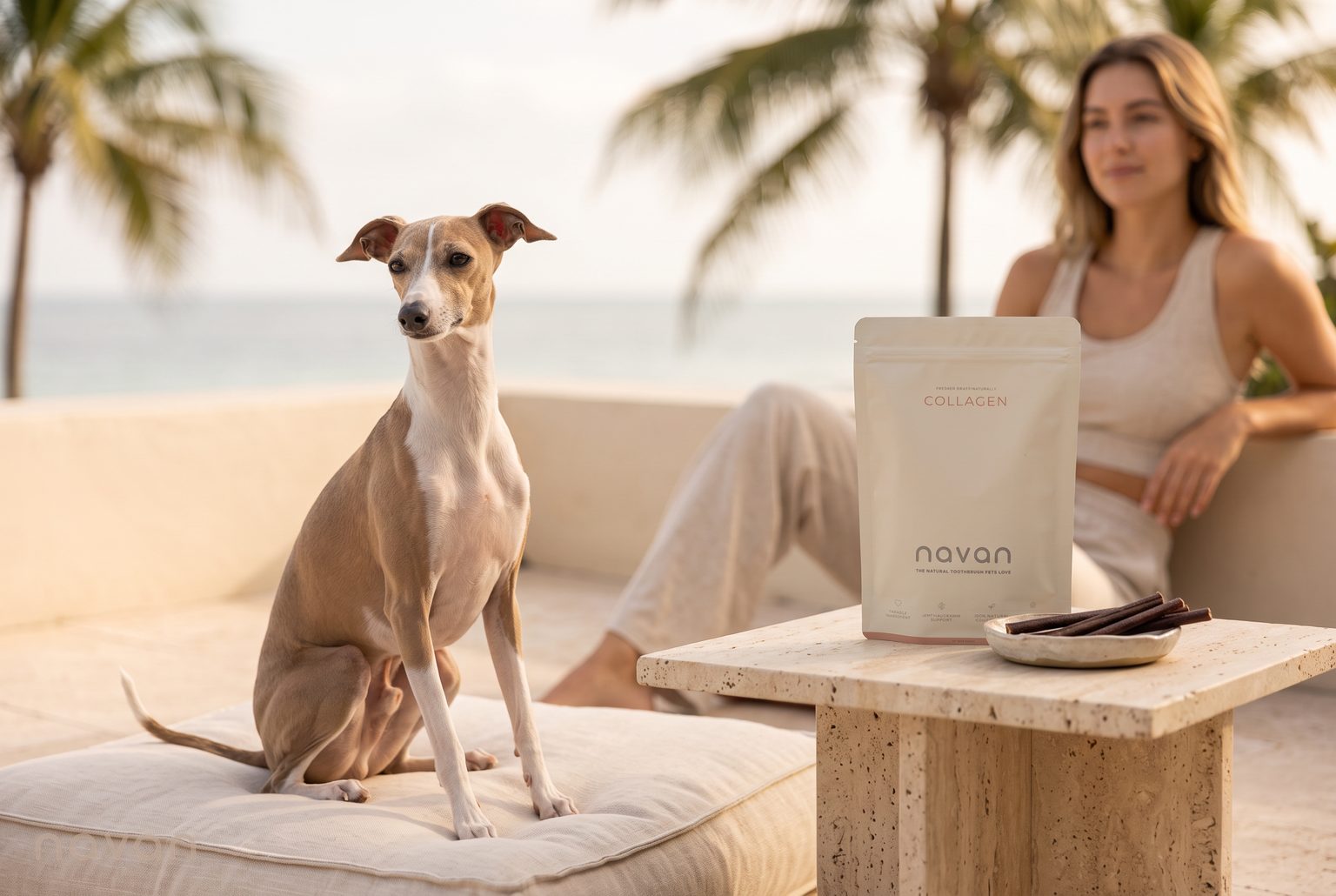
NAVAN's collagen sticks are slow-dehydrated in small batches from a single ingredient, collagen pressed from the corium, the deep, elastic layer of hide, into a stick your dog can work through in one sitting. The rabbit stick pairs that same collagen with rabbit meat, twisted into a denser chew that sits between a soft collagen stick and a full rabbit ear. Neither is dosed like a joint supplement. They're a chew first, an amino-acid source second.
what are the benefits of collagen for dogs?
a gentler gnaw and a real, if modest, amino-acid bonus, with the joint claims still catching up.
Start with what collagen is: the most abundant protein in your dog's body, roughly 30% of all of it, and the same protein that scaffolds skin, tendon, cartilage, and the walls of the gut. Feeding more of it is an intuitive leap, and it is not what the research tested. A 2025 narrative review in the Journal of Animal Physiology and Animal Nutrition looked at hydrolyzed collagen peptides as nutritional support for canine osteoarthritis and found preliminary evidence of reduced lameness and improved mobility, though the authors were careful to call the evidence promising rather than settled, and biomarker-level effects were inconclusive. That research tests a concentrated peptide supplement fed at a specific dose, which is a different thing from a whole dehydrated chew eaten a few times a week. We'd rather draw that line clearly than borrow a supplement study to sell a treat.
| claim | what's been studied | what it means for a chew |
|---|---|---|
| joint support | hydrolyzed collagen peptides, dosed feeding trials in dogs with osteoarthritis | preliminary, not a chew-treat study |
| skin & coat | amino acid profile (glycine, proline, hydroxyproline) | same building blocks; no controlled trial on chews specifically |
| gentler digestion | general veterinary guidance comparing rawhide to softer chews | widely recommended by vets, not a head-to-head clinical trial |
| dental habit | mechanical chewing action, same category as other chews | softer than a rabbit ear or duck neck; less abrasive contact time |

what's in it
- 1 ingredient
- 0 glycerin
- 0 starch
- never braided
- slow-dehydrated
- for small jaws
are collagen bones good for dogs?
A collagen stick isn't a bone, so the comparison is a mix-up worth clearing up. The FDA's consumer update on bone treats lays out the case plainly: real bone can splinter into sharp fragments, fracture a dog's back teeth, or lodge in the throat or gut. A collagen stick is made from hide, not bone, so it doesn't carry that specific splinter risk. That doesn't make it risk-free. Any chew, sized wrong or swallowed in one gulp, is a hazard, which is why sizing to your dog and supervising the first few sessions still matters.
how is a collagen chew different from a bully stick or rawhide?
Bully sticks are dehydrated muscle, rawhide is chemically treated animal hide, and collagen sticks are pressed from the collagen-rich corium layer of the hide. Rawhide's processing, soaking, bleaching, sometimes basted with flavoring, is a big part of why it's flagged so often. Collagen sticks skip that chemistry: one ingredient, dehydrated, nothing added. That's a processing difference, not a health claim, but it's the reason a lot of small-dog owners move to collagen after a bad experience with rawhide.
how often should you give your dog a collagen chew?
Daily is fine as part of a small dog's routine, sized to your dog and counted into their daily calories rather than added on top. The tryptophan gap isn't a NAVAN-specific quirk, it's basic amino acid chemistry: collagen protein lacks tryptophan, an amino acid every dog needs from somewhere in the diet (research on functional collagen peptides, Paul et al., Nutrients, 2019, documents this for human diets; the underlying chemistry is the same protein, so the same gap applies). As a daily chew alongside a complete dog food, that's a non-issue. As the only source of protein in a diet, it wouldn't be balanced, and no responsible brand should suggest otherwise.
So, is collagen good for dogs? As a chew, yes, it's a gentle, single-ingredient option that gives dogs something worth working on and a real, if modest, nutritional bonus. As a joint treatment, the evidence isn't there yet for a chew specifically, only for a different, more concentrated form of the same ingredient.
we sell it for the chewing. the joint research is about something else entirely.
collagen sticks · 15 day supply
$35 one-time · from $29.75/mo on subscription
add to cart → live from shopify · price & stock always currentthe navan take
the interesting thing about collagen is what we've decided not to say about it. the joint research people quote is mostly human, mostly on isolated peptides, and mostly at doses a chew doesn't approach. so we don't make a joint claim, even though it would sell well. here is what a collagen stick is: dense connective tissue that takes a dog a long time to work through, which is the entire dental argument and plenty on its own. if your dog needs joint support, that conversation belongs with your vet and not on our packaging.
frequently asked
is collagen good for dogs?
what are the benefits of collagen for dogs?
are collagen bones good for dogs?
how is a collagen chew different from a bully stick or rawhide?
how often should you give your dog a collagen chew?
not sure where to start?
build your dog's dental protocol in 60 seconds.
answer a few quick questions and we'll match the single-ingredient chews that fit your dog's size, mouth, and needs.
take the dental quiz →sources: U.S. Food and Drug Administration, consumer update, "No Bones (or Bone Treats) About It: Reasons Not to Give Your Dog Bones"; Blees, N. et al., "Collagen Hydrolysates as Nutritional Support in Canine Osteoarthritis: A Narrative Review," Journal of Animal Physiology and Animal Nutrition, 2025; Paul, C., Leser, S., Oesser, S., "Significant Amounts of Functional Collagen Peptides Can Be Incorporated in the Diet While Maintaining Indispensable Amino Acid Balance," Nutrients, 2019 (human dietary research; cited here for the underlying amino acid chemistry of collagen, not a canine feeding trial).
want navan's latest guides and updates to reach you more often? add us as a preferred source on google.
add navan as a preferred source on google