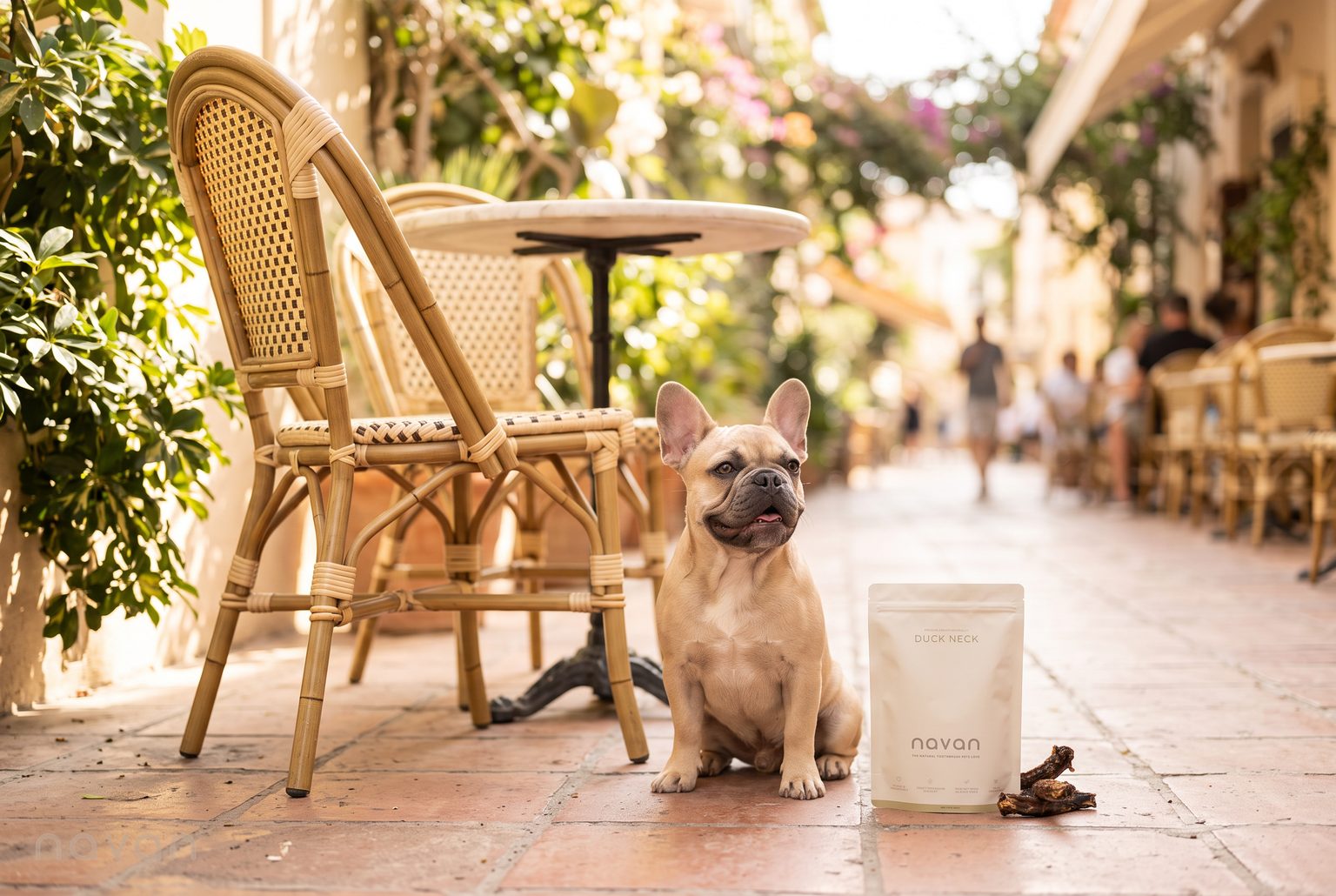
guides · 6 min read
single-ingredient dog treats, explained.
what “one ingredient” really means, and why it quietly changes everything about allergies, digestion, and the work your dog's teeth are doing every day.
the short version
- a single-ingredient treat is exactly one whole food, one animal part or protein, with nothing added.
- it isolates one protein, so you can spot and avoid an allergen during a vet-guided elimination trial.
- fewer additives means less to upset a sensitive stomach, and a label you can actually read.
- as a firm, air-dried chew it does real mechanical work, scraping soft plaque before it hardens.
- choose one that is truly one line on the panel, air-dried not extruded, and sized to your dog's jaw.
what is a single-ingredient dog treat?a single-ingredient dog treat is made of exactly one whole-food ingredient, one animal part or one protein, with nothing added: no grains, starch, glycerin, binders, preservatives, dyes, or flavorings. if the label says “duck neck,” the only thing in the bag is duck neck. that transparency is the entire point.
Turn over most treats in the pet aisle and the ingredient panel reads like a paragraph. A named protein, then starches, glycerin, “natural flavor,” a preservative you can't pronounce, and a dye that's there so the biscuit looks like bacon. A single-ingredient treat is the opposite kind of thing. Its whole ingredient list is one line. Sometimes one word.
It sounds like a marketing simplification. It isn't. Take everything out but the food and the treat changes. It sits differently in a sensitive stomach. It tells you something clear when a reaction shows up. And for small dogs, it does a surprising amount of quiet dental work on the way down.
The thing that trips people up is “duck” versus “duck-flavored.” Under the labeling rules the FDA and AAFCO set, a product can lean on a protein's name while that protein is a minority of what's actually inside, the rest filler and flavoring. “Natural” is just as loose. It doesn't mean “one thing.” A true single-ingredient chew takes the guesswork out. There's nothing else in the bag to wonder about.
why does single-ingredient actually matter?
one ingredient, doing three jobs at once.
it isolates one variable
most food reactions are to proteins a dog has eaten over and over: beef, dairy, and chicken. a single novel protein is the whole reason vets build an elimination diet around one ingredient. sensitivity reaches roughly 90% by week eight of a strict trial (Olivry et al.).
fewer additives, calmer digestion
a sensitive stomach usually reacts to the supporting cast, the emulsifiers, added fats, and preservatives, more than to the protein itself. strip those out and there's less to react to, and it's easy to keep treats inside the roughly 10% of daily calories vets recommend.
the quiet dental benefit
a whole, air-dried chew is firm, and firm chews do real mechanical work, lifting plaque while it's still a soft film. 80% of dogs show periodontal disease by age three (AVDC), and extra-small breeds are up to five times more likely to be diagnosed than large dogs (The Veterinary Journal).
| single-ingredient chew | conventional treat | |
|---|---|---|
| ingredients | one whole food | protein + starch, glycerin, flavor, dye, preservative |
| allergy control | isolate one protein | many possible triggers |
| processing | slow air-dried, structure intact | extruded, binders, denatured protein |
| dental work | firm, scrapes plaque mechanically | soft/crumbly, little abrasion |
| label | one line, readable | a paragraph |
are they safe, and how do you choose a good one?
short answeryes, for most dogs, when the chew is sized right and given with supervision. choose one that is truly one ingredient, gently air-dried rather than extruded, made in a known supply chain, and matched to your dog's jaw. introduce it slowly over a few days and watch the first few sessions.
Four things separate a good single-ingredient chew from one that's just simple:
- truly one ingredient. read the panel, not the front. one line is the bar.
- air-dried, not extruded. slow dehydration keeps the protein structure, and the firmness that does the dental work, intact. extrusion denatures protein and needs binders to hold a shape.
- a supply chain you can name. where the animal was raised and where the chew was made both matter. navan slow-dehydrates in the US.
- sized to the dog. a chew for a 6-lb dog is not a chew for a 60-lb dog. match the piece to the jaw, and supervise, whole chews should never be gulped.
One note on dental claims. If a product advertises a specific plaque-or-tartar reduction number, look for the VOHC seal, the independent council that reviews that evidence. A whole single-ingredient chew earns its dental value the old-fashioned way, through the friction of chewing, and it pairs well with brushing and regular vet checks.
where to start on the navan shelf
Navan makes single-ingredient chews for small dogs. One part, slow-dehydrated in the US, nothing added. Each one is its own SKU on purpose, and together they make up the daily protocol, so you always know exactly what your dog is chewing.
one line on the ingredient list. that is the entire claim.

rabbit ears · 10 day supply
$35 one-time · from $29.75/mo on subscription
add to cart → live from shopify · price & stock always currentthe navan take
keeping each protein on its own SKU costs us money. a blended chew would be cheaper to make, cheaper to ship, easier to keep in stock. we don't do it because the moment two proteins share a bag, the chew becomes useless to the people who need it most: the dog on an elimination trial, the owner still working out what sets him off. one part per bag means the label is the whole story. it is also the oldest format there is. long before any of this was a category, a dog's entire dental routine was one animal part and a jaw.
frequently asked
what does single-ingredient mean in dog treats?
are single-ingredient dog treats better for dogs?
are single-ingredient treats good for dogs with allergies?
what is the best single-ingredient dog treat?
are single-ingredient chews safe for small dogs and puppies?
how many single-ingredient treats can a dog have per day?
not sure where to start?
build your dog's dental protocol in 60 seconds.
answer a few quick questions and we'll match the single-ingredient chews that fit your dog's size, mouth, and needs.
take the dental quiz →sources: Veterinary Oral Health Council (plaque/tartar seal of acceptance); American Veterinary Dental College, periodontal disease in >80% of dogs by age 3; The Veterinary Journal / Mars Petcare, extra-small breeds up to 5× periodontal risk; Olivry et al. 2015, critically appraised topic on adverse food reactions in companion animals (PMC4551374); U.S. FDA & AAFCO pet-food labeling guidance; Merck Veterinary Manual, periodontal disease in small animals.
want navan's latest guides and updates to reach you more often? add us as a preferred source on google.
add navan as a preferred source on google