guides · 6 min read
how to clean your dog's teeth at home.
the realistic routine, brushing, a daily chew, an additive, diet, what each one does, what none of them can do, and where the vet comes in.
the short version
- the best home routine pairs brushing with a daily dental chew and a VOHC water additive.
- home care controls plaque. it can't remove hardened tartar below the gumline, that needs a vet cleaning.
- "anesthesia-free" cleaning is not a shortcut. the AVDC advises against it.
- most dogs have some gum disease by age three, and small dogs are hit hardest, up to 5x the risk of large breeds.
- the chew is the habit most owners actually keep. brushing works best, but only if you'll do it.
what's the best way to clean a dog's teeth at home?the most effective home routine combines brushing with a dog-safe toothpaste, a daily dental chew, and a VOHC-accepted water additive. brushing removes the most plaque; a daily chew is the easiest habit to keep. together they control plaque before it hardens, but they don't replace professional cleanings.
the daily toolkit
you don't need a cabinet of products. you need a couple of habits you'll actually repeat.
brushing is the gold standard. nothing lifts plaque as directly as a brush. even two or three times a week with a dog-safe toothpaste (never human toothpaste, it can contain xylitol) makes a real difference. go slowly: let the dog taste the paste, then a finger brush, then a few teeth at a time.
a daily dental chew is the habit most owners can actually keep up. as the dog works a firm chew, it scrapes soft plaque off the tooth surface. no standoff, no cooperation required. for a specific plaque-or-tartar claim, look for the VOHC seal; for a clean daily chew, look for one whole ingredient.
a water additive mixes into the bowl to keep oral bacteria in check, about as low-effort as dental care gets. choose a VOHC-accepted additive, and treat it as support rather than a fix on its own.
diet does a little of the work too. crunchy carrot or apple slices add mild abrasion, and some dogs do well on a therapeutic dental diet built to scrub as they chew. ask your vet whether one fits your dog.
the routine, step by step
five moves, in order.
- brush if you can. a few times a week, dog-safe toothpaste, build up slowly.
- add a daily chew. one firm, single-ingredient chew a day.
- use a VOHC water additive. daily, in the bowl.
- support with diet. crunchy veg, or a vet-recommended dental diet.
- keep professional cleanings. on your vet's schedule; it's the only way to clear set tartar.
at-home dental methods, compared
what each one does, and where it stops.
| method | what it does | effort | the limit |
|---|---|---|---|
| brushing | removes plaque directly | medium | needs buy-in |
| daily chew | scrapes soft plaque | low | won't remove set tartar |
| water additive | controls bacteria | very low | helper only |
| diet / crunchy veg | mild abrasion | low | partial |
| vet cleaning | removes tartar below gumline | vet visit | needs anesthesia |
what home care can't do
here's the honest limit. home care controls plaque, but it cannot remove tartar once it has hardened below the gumline, and that's exactly where periodontal disease does its damage. nothing you do at home reaches that far. that job takes professional scaling under anesthesia. and no, "anesthesia-free" cleaning isn't the shortcut it sounds like. the AVDC advises against it, because it only polishes the visible surface and skips the exam, x-rays, and below-the-gumline cleaning that matter.
when to see the vet
book a dental exam if you notice yellow-brown tartar, red or bleeding gums, breath that won't quit, drooling, or a change in how your dog eats. small dogs earn earlier, more frequent checks.
the easiest habit to keep
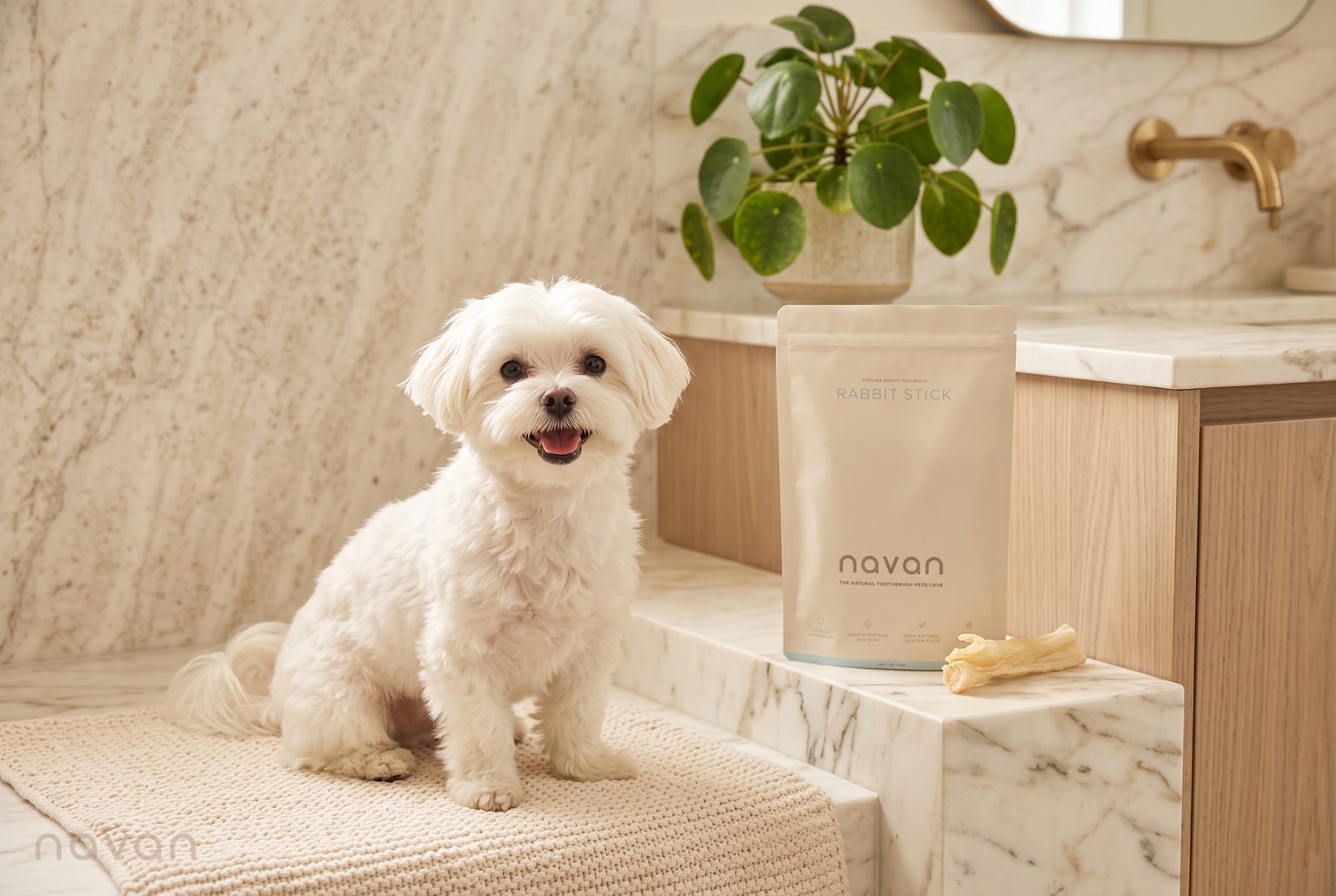
if brushing is a battle in your house, start with the chew. it's the daily plaque habit that survives real life. navan makes single-ingredient dental chews for small dogs to be exactly that: one part, slow-dehydrated, nothing added, a habit for the days between your vet cleanings.
above the gumline is your job. below it belongs to the vet.

rabbit ears · 10 day supply
$35 one-time · from $29.75/mo on subscription
add to cart → live from shopify · price & stock always currentthe navan take
the limit of home care is worth stating plainly. everything you can do at the kitchen table works above the gumline. below it, where periodontal disease does its real damage, you cannot reach, and neither can we. that isn't an argument for skipping home care, it's the reason home care matters: keeping the surface clean is how you slow what's happening underneath. we make one piece of that routine. your vet handles the part nobody sells a product for.
frequently asked
what is the best way to clean a dog's teeth at home?
how can i clean my dog's teeth without a professional cleaning?
can i clean tartar off my dog's teeth at home?
how often should i clean my dog's teeth?
not sure where to start?
build your dog's dental protocol in 60 seconds.
answer a few quick questions and we'll match the single-ingredient chews that fit your dog's size, mouth, and needs.
take the dental quiz →sources: VCA Animal Hospitals (keeping teeth clean at home); American Veterinary Dental College (position on scaling and home care); Veterinary Oral Health Council (accepted products); American Veterinary Dental College / AVMA (periodontal disease in >80% of dogs by age 3); The Veterinary Journal (extra-small breeds up to 5x periodontal risk).
want navan's latest guides and updates to reach you more often? add us as a preferred source on google.
add navan as a preferred source on google