health · 6 min read
why your dog's breath smells bad.
a little dog-breath is normal. a smell that clears the room usually isn't, and it's almost always starting at the teeth.
the short version
- a little dog-breath is normal. a smell that clears the room usually isn't.
- the most common cause by far is periodontal disease: plaque hardens to tartar, gums inflame, bacteria smell.
- more than 80% of dogs show signs by age three, and small dogs get hit hardest.
- some odors point elsewhere: sweet or fruity can mean diabetes, urine or ammonia can mean kidney disease. see a vet.
- home care (a daily chew, brushing, a VOHC additive) controls plaque before it sets, but only a vet cleaning lifts hardened tartar.
why does my dog have bad breath?the most common cause of bad breath in dogs is periodontal disease, bacteria and plaque building up on the teeth and gums. persistent bad breath can also come from broken or infected teeth, or from systemic conditions like kidney disease, liver disease, or diabetes. occasional mild dog-breath is normal; a constant strong smell is not.
the usual suspect: periodontal disease
most bad breath starts in the mouth, and follows a predictable cycle.
the uc davis school of veterinary medicine points to one source: the bacteria in the biofilms coating the teeth, tongue, and gums. from there the cycle is predictable. bacteria form soft plaque, plaque hardens into tartar, tartar inflames the gums (gingivitis), and untreated gingivitis becomes periodontal disease, where the infection moves below the gumline and destroys the structures that hold teeth in place.
small jaws crowd the teeth and trap plaque, so if your dog is small, bad breath is a signal to take seriously, and early.
when bad breath means something more
most bad breath is dental. now and then the kind of smell points elsewhere, and that deserves a vet visit, not a mint.
| the smell | what it can mean | what to do |
|---|---|---|
| rotten / foul, ongoing | plaque, tartar & periodontal disease | dental care + vet checkup |
| fishy | anal glands or dental disease | see the fish-breath guide |
| sweet / fruity | possible diabetes | see a vet promptly |
| urine / ammonia | possible kidney disease | see a vet promptly |
none of this is a diagnosis. it's a reason to book an exam. broken or infected teeth, oral inflammation, and, rarely, oral tumors can all drive a strong smell too.
what you can do at home
home care controls plaque before it hardens. it can't lift tartar that's already cemented below the gumline, that part needs a professional cleaning.
- a daily dental chew. a firm chew scrapes soft plaque off the teeth mechanically, before it mineralizes into the tartar that smells. the lowest-effort daily habit that actually does something.
- brushing. the gold standard, if your dog tolerates it. even a few times a week helps.
- a water additive. look for the VOHC seal, and treat it as a helper, not a fix.
- regular vet checkups & cleanings. the only way to deal with tartar that's already there.
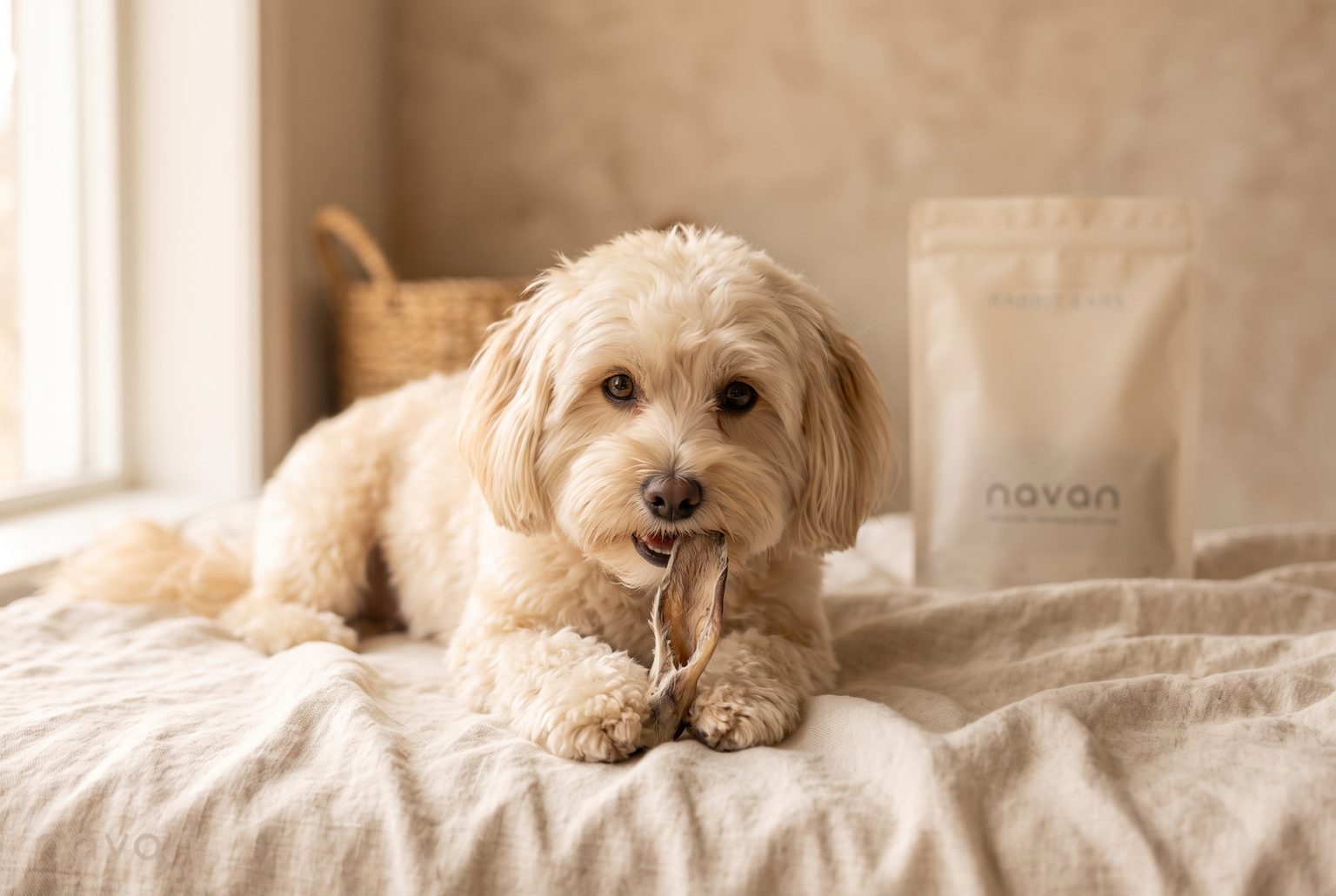
bad breath isn't a personality trait. it's the first thing your dog's mouth tells you.
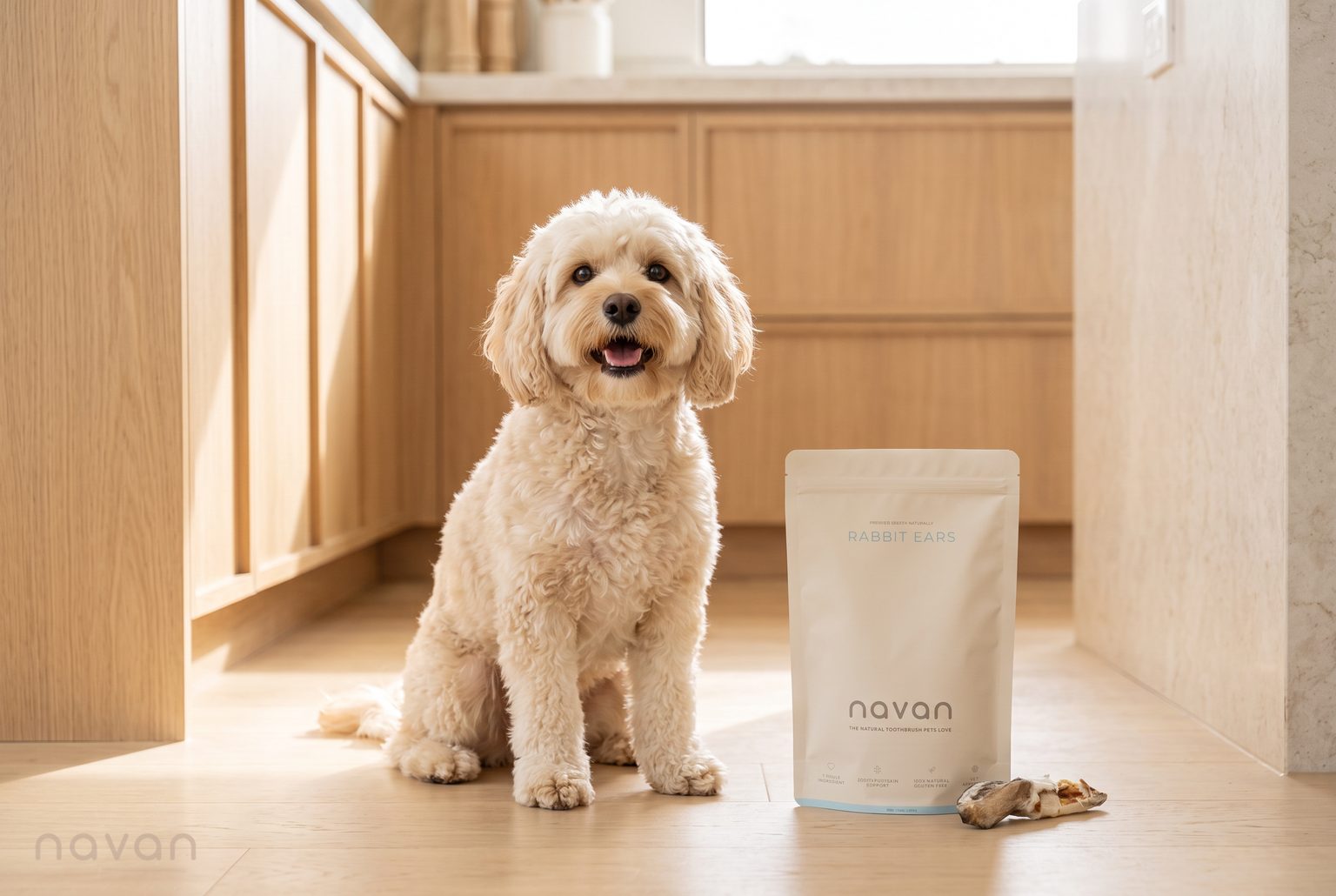
of everything on that list, a chew is the easiest to keep up. navan makes single-ingredient dental chews for small dogs: one part, slow-dehydrated, nothing added, built to be the daily mechanical habit that keeps plaque from becoming the tartar that smells. it supports the routine between your vet cleanings; it doesn't replace them.

rabbit ears · 10 day supply
$35 one-time · from $29.75/mo on subscription
add to cart → live from shopify · price & stock always currentthe navan take
here is the fact we'd underline: plaque stays soft for roughly 24 to 72 hours, then it mineralizes and nothing you do at the kitchen table touches it again. that one number decides everything about dental care at home. it means a thorough brushing on sunday is worth less than something ordinary done every day, and it's why we sell a daily chew instead of a weekly treatment. the smell is just the part of that process you happen to notice.
frequently asked
why does my dog have bad breath?
is bad breath in dogs a sign of illness?
how do i get rid of my dog's bad breath?
is it normal for dogs to have bad breath?
can dental chews help with dog bad breath?
not sure where to start?
build your dog's dental protocol in 60 seconds.
answer a few quick questions and we'll match the single-ingredient chews that fit your dog's size, mouth, and needs.
take the dental quiz →sources: UC Davis School of Veterinary Medicine, halitosis in dogs; VCA Animal Hospitals, halitosis causes; American Veterinary Dental College & AVMA, periodontal disease in >80% of dogs by age 3; The Veterinary Journal / Mars Petcare, extra-small breeds up to 5× periodontal risk; Veterinary Oral Health Council, accepted dental products.
want navan's latest guides and updates to reach you more often? add us as a preferred source on google.
add navan as a preferred source on google