guides · reading time 6 min
home remedies for bad dog breath that actually help
the at-home fixes worth your time, and the honest limits of what a chew, a brush, or a sprig of parsley can really do.
the short version
- home remedies help within limits: they prevent and reduce mild odor, they don't cure disease.
- the effective ones are the dull daily ones: a firm dental chew and brushing physically remove plaque.
- water additives (pick VOHC) help control bacteria; crunchy carrot or apple add a little abrasion.
- parsley and mint only mask odor briefly, and never use human mouthwash or mints (xylitol is toxic).
- strong, sudden, or worsening breath means a vet, not a remedy.
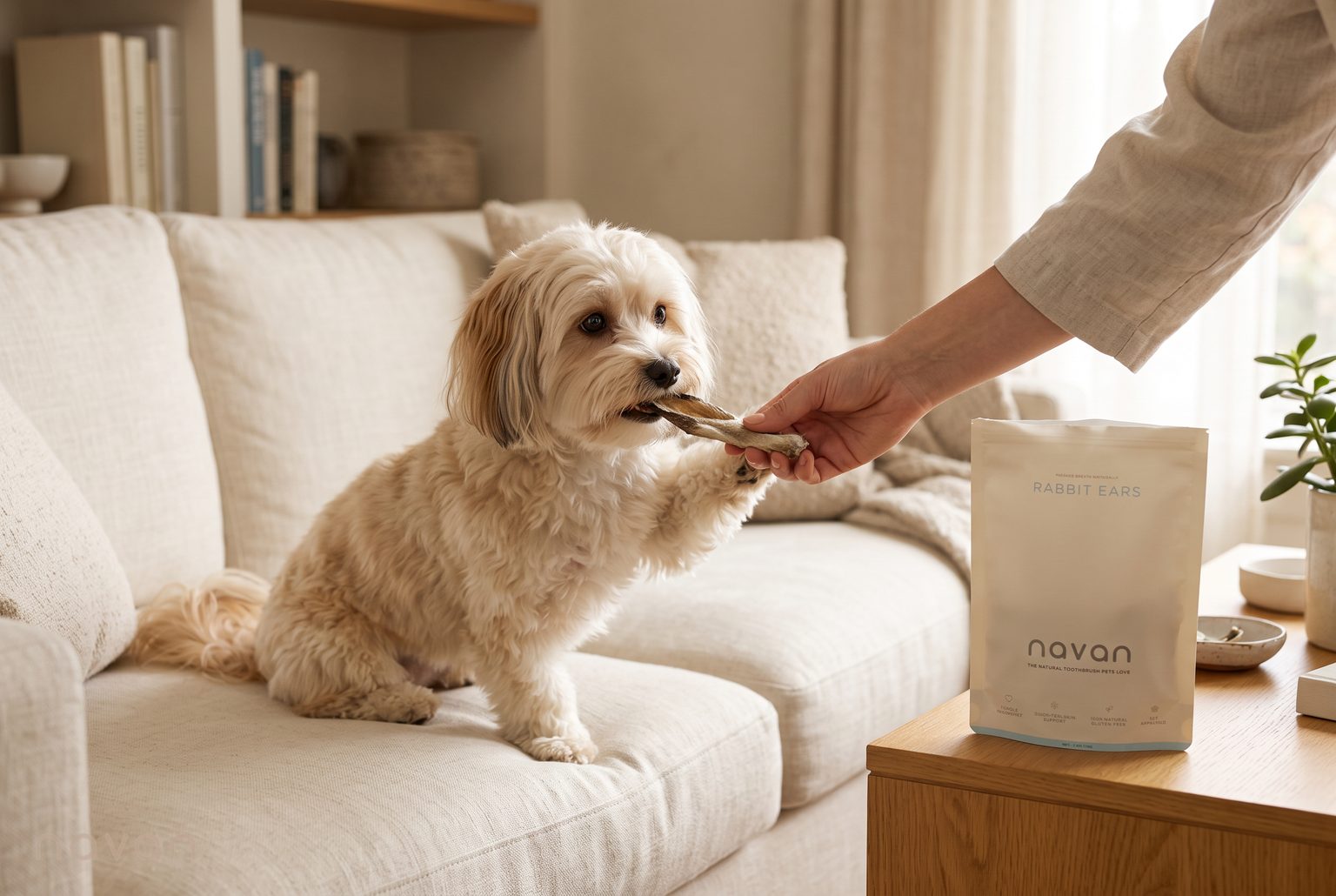
search "home remedies for bad dog breath" and you'll get a hundred listicles promising a quick fix. the honest version is duller. the remedies that work are the boring, daily ones, and none of them cures a mouth that already has disease. what follows is what actually helps, ordered by how much it does, plus the point where home care hands off to your vet.
do home remedies for bad dog breath actually work?they help, within limits. home care can prevent and reduce mild bad breath by controlling plaque before it hardens, but it can't remove tartar below the gumline or cure established periodontal disease. if the smell is strong, sudden, or paired with other symptoms, see a vet.
what actually helps (in order of impact)
the least glamorous habits do the most work.
1 · a daily dental chew
the lowest-effort habit that does real work. a firm chew scrapes soft plaque off the teeth before it mineralizes into the tartar that smells. look for single-ingredient chews you can feed every day. and if you want a specific plaque-or-tartar claim behind it, look for the VOHC seal.
2 · brushing
the gold standard. even a few times a week with a dog-safe toothpaste removes plaque directly. build up slowly. a finger brush and a lot of patience beats a battle.
3 · a water additive
a low-effort helper you stir into the bowl to keep oral bacteria in check. favor VOHC-accepted additives, and treat it as support, not a solution.
4 · diet & crunchy vegetables
crunchy carrot, celery, or apple slices add a little abrasive cleaning as the dog chews. a cleaner diet overall helps too: less residue left behind, less for bacteria to ferment.
5 · parsley & mint
fresh parsley and mint carry chlorophyll, which can briefly cut odor when chopped into food. it's a freshener, not a fix. and skip parsley for pregnant dogs.
how to freshen your dog's breath at home
the daily routine, in order.
- rule out disease first. book a vet dental check, home care manages mild odor, it can't cure periodontal disease or systemic causes.
- add a daily dental chew. one firm, single-ingredient chew a day to lift plaque before it hardens.
- start brushing. a few times a week with dog-safe toothpaste; build up slowly.
- use a VOHC water additive. to help control bacteria between brushings.
- tidy the diet. crunchy carrot or apple, a little fresh parsley.
- keep it consistent. consistency beats intensity, and recheck with the vet if the smell persists.
home remedies, honestly rated
what each one does, how often, and the catch.
| remedy | what it does | how often | the catch |
|---|---|---|---|
| daily dental chew | scrapes soft plaque | daily | prevents, doesn't remove set tartar |
| brushing | removes plaque directly | 3 to 7×/week | needs patience & buy-in |
| water additive | controls bacteria | daily | helper only; pick VOHC |
| crunchy veg | mild abrasion | as a treat | watch calories |
| parsley / mint | masks odor briefly | occasional | temporary; no parsley if pregnant |
the myths worth skipping
the same searches turn up a handful of "remedies" that don't hold up, and a few that are actively risky. here's what to leave out.
| remedy | does it help? | the evidence |
|---|---|---|
| human mouthwash or mints | no, unsafe | many contain xylitol, which is toxic to dogs; alcohol and detergents aren't made to be swallowed |
| apple cider vinegar in water | no | no dental benefit shown; can put dogs off drinking and irritate the mouth |
| coconut oil | no | a mild flavor change at best; adds calories, doesn't remove plaque |
| raw or cooked bones | not worth the risk | a common cause of fractured teeth and gut injuries; cooked bones splinter |
| starchy "dental" treats | marginal | shape can help a little, but sugars and fillers feed the same bacteria |
| a firm single-ingredient chew | yes | daily mechanical scraping lifts soft plaque before it hardens; look for the VOHC seal |
when home remedies aren't enough
home care has a real ceiling. by age three, more than 80% of dogs already show some periodontal disease, and once tartar has hardened below the gumline no chew, brush, or additive can lift it, that needs a professional cleaning. home care also can't cure established periodontal disease, and it can't touch the non-dental causes, kidney disease, liver disease, diabetes. see a vet if the smell is strong, sudden, or getting worse, or if it comes with drooling, pawing at the mouth, appetite changes, or a sweet, fruity, or urine-like odor. (more on reading the smell in our guide to why dogs get bad breath.)
the one habit worth keeping
if you keep one thing off this list, keep the daily chew. it's the habit that fits a real week. navan's single-ingredient dental chews for small dogs are built for exactly that: one part, slow-dehydrated, nothing added, firm enough to do the daily plaque work between your vet cleanings.
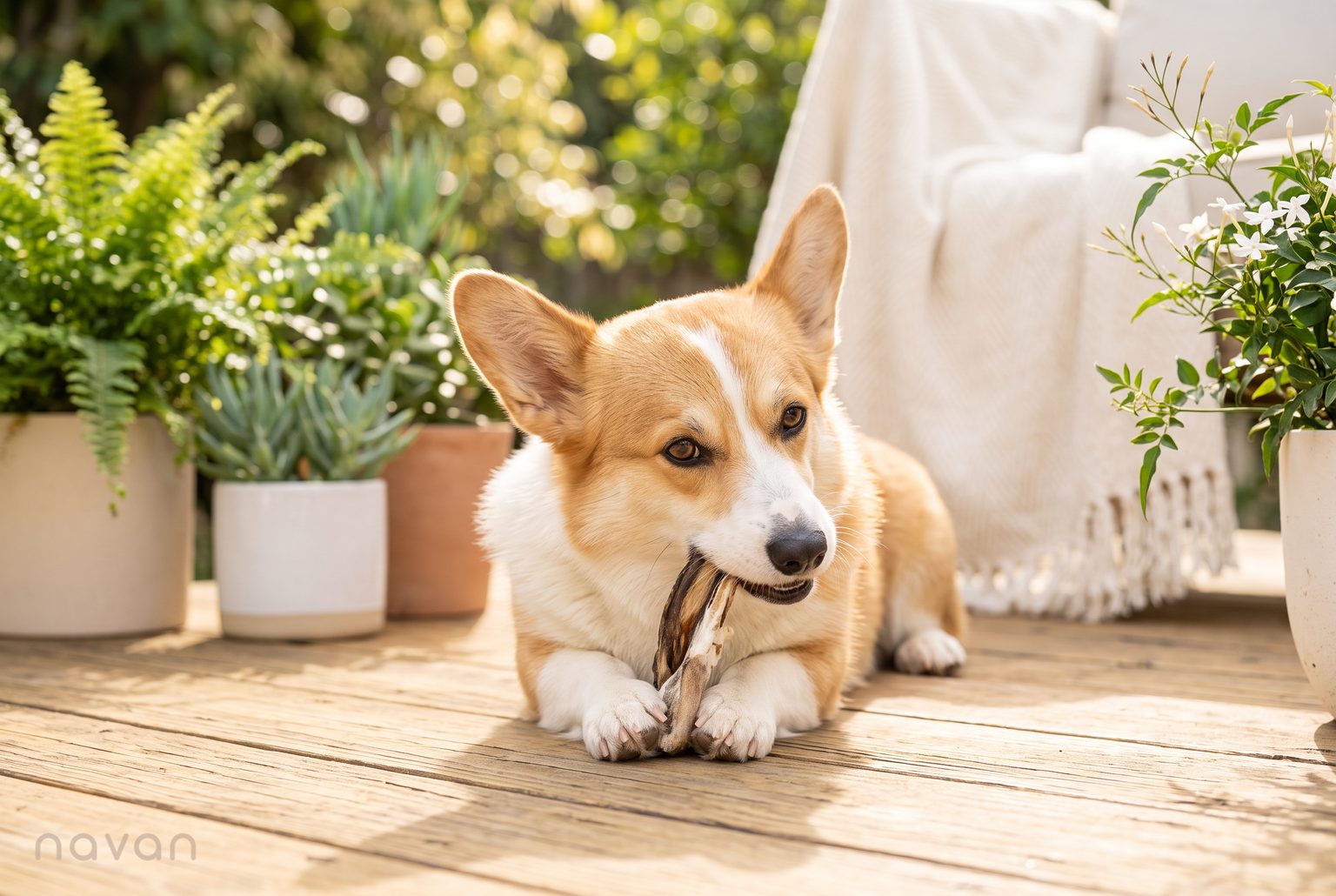
what's in it
- 1 ingredient
- 0 glycerin
- 0 starch
- slow air-dried
- whole protein
- for small jaws
the best remedy for bad breath is the one you'll actually do every day.

rabbit ears · 10 day supply
$35 one-time · from $29.75/mo on subscription
add to cart → live from shopify · price & stock always currentthe navan take
we'd rather talk about adherence than efficacy. nearly every remedy on this page works on paper, and nearly none of them survive a bad tuesday. brushing a small dog's teeth is the gold standard and also the thing most owners quietly abandon by week three. so the useful question isn't which method cleans best in a trial, it's which one you'll still be doing in march. we build for that second question, which is why our answer takes about eleven seconds and the dog does the work.
frequently asked
how can i get rid of my dog's bad breath at home?
what home remedy works for dog bad breath?
how do i get rid of bad dog breath fast?
does parsley help dog breath?
can i put anything in my dog's water for bad breath?
not sure where to start?
build your dog's dental protocol in 60 seconds.
answer a few quick questions and we'll match the single-ingredient chews that fit your dog's size, mouth, and needs.
take the dental quiz →sources: UC Davis School of Veterinary Medicine (halitosis in dogs); Veterinary Oral Health Council (accepted chews & water additives); American Veterinary Dental College (periodontal disease & home care limits); American Kennel Club (dog dental care & bad breath); ASPCA Animal Poison Control (xylitol toxicity in dogs).
want navan's latest guides and updates to reach you more often? add us as a preferred source on google.
add navan as a preferred source on google