
body odor · 7 min read
why does my dog smell like fish?
glands, breath, skin & gut. the fishy smell almost never starts where you'd guess, here's how to read it, and what actually helps.
the short version
- anal glands are the most common cause of a dog smelling like fish, not the mouth.
- a dog that only has fishy breath, not a whole-body smell, is more likely dealing with dental plaque, see our breath-specific deep dive.
- skin and ear yeast can smell musty or fishy too, especially in warm folds and floppy ears.
- a fish-based diet or fish oil is the harmless explanation, and the easiest to rule out.
- chews only help the dental cause. they do nothing for glands, skin, or diet.
why does my dog smell like fish?most of the time it's the anal glands, not the mouth. these two small scent sacs near a dog's rectum release a fishy-smelling fluid when they're full or impacted, and a dog who licks the area spreads that smell to its coat and face. dental disease, skin or ear infections, and fish-based diets can all cause a fishy smell too, just less often.
it starts near the tail, not the teeth
the instinct is to check the mouth first. that's usually the wrong place to look.
in most dogs, a fishy, whole-body smell traces back to two small glands near the tail, not the teeth, and knowing that changes what you should actually do about it. every dog has a pair of anal glands, small sacs just inside the rectum that fill with a strong-smelling fluid and normally empty a little with each bowel movement. cornell university's college of veterinary medicine describes the discharge's smell in exactly those terms, a "characteristic fishy odor", and notes that smaller dogs, chihuahuas especially, are affected more often than larger breeds. when the glands don't empty properly, the fluid thickens, backs up, and the smell gets stronger. the dog then licks or scoots to relieve the discomfort, which is how a gland problem ends up smelling like a mouth problem.
how common is this, really?
more common than most owners expect.
a large 2014 study of dogs at primary-care veterinary practices in england, published in PLoS ONE and hosted by the national institutes of health, found anal sac impaction in 7.1% of the more than 3,800 dogs studied, and some form of anal sac disorder in 8.7%. that makes it one of the more frequently diagnosed conditions in the study, well ahead of most single dental diagnoses.
source: O'Neill et al., "Prevalence of Disorders Recorded in Dogs Attending Primary-Care Veterinary Practices in England," PLoS ONE, 2014, n=3,884.
could it be something else?
three other suspects, ranked by how often they're the real story.
his breath
location is the tell. if the smell is strongest when your dog exhales, or you notice it most up close to the face, dental plaque is the more likely source. that's a mouth problem with its own fix, covered in our breath-specific guide.
skin or ears
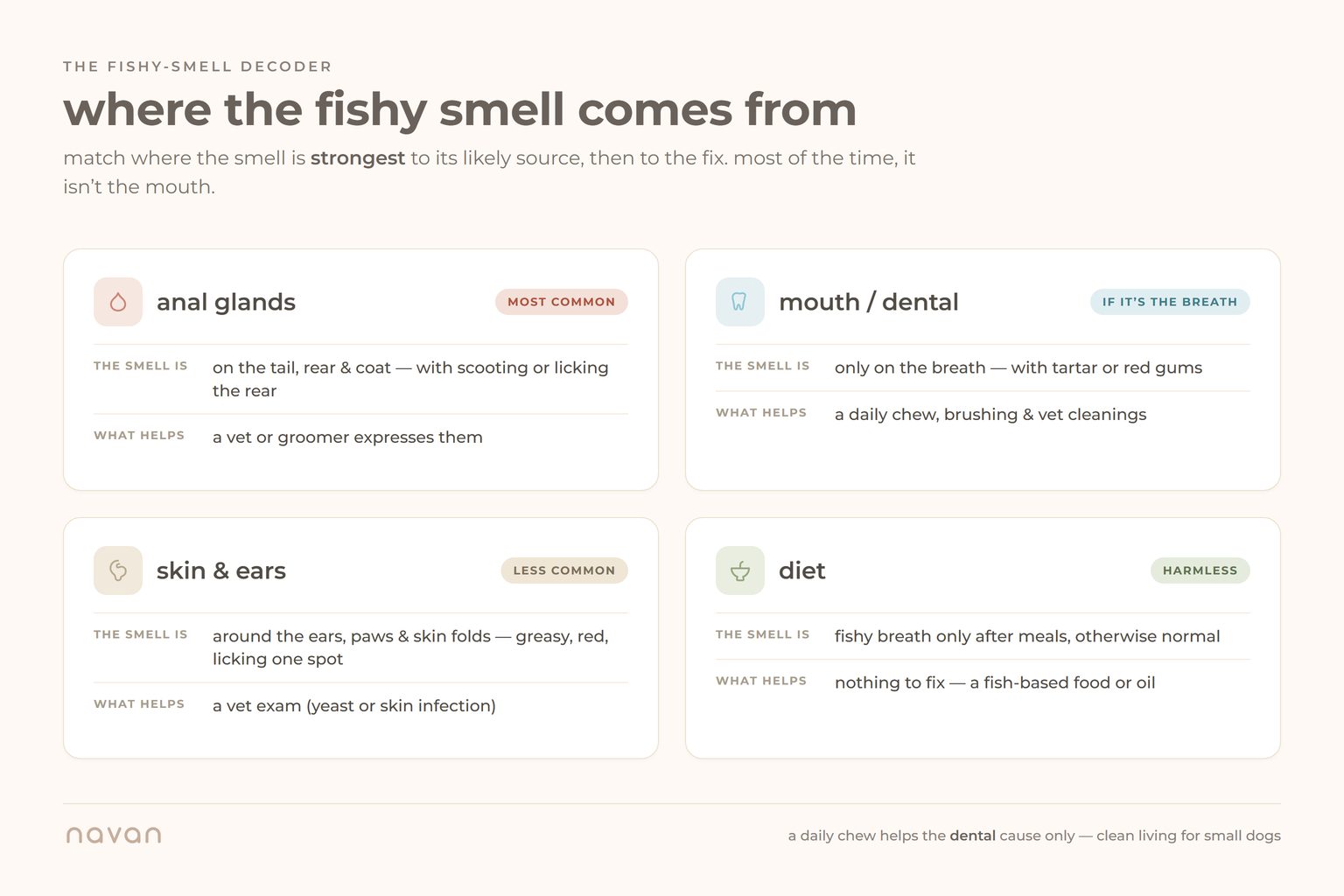
warm, moist spots, ears, paw folds, skin folds, are where yeast (Malassezia) overgrows. VCA animal hospitals calls the smell musty or sweet rather than strictly fishy, with greasy skin and constant licking at one spot.
just diet
the harmless one. a fish-based food or a fish-oil supplement can make a dog's breath, and sometimes its skin, smell like what it's eating. if it tracks with mealtimes and there's no scooting or irritation, there's nothing to fix.
how to tell which one it is
read the source by where the smell is strongest.
| smell is strongest at | other signs | likely source | what to do |
|---|---|---|---|
| tail, rear, coat | scooting, licking rear, discomfort sitting | anal glands | vet or groomer expresses them |
| mouth, breath | tartar, red gums | dental plaque | daily chew + brushing + vet cleanings |
| ears, paws, skin folds | redness, greasy coat, constant licking one spot | yeast or skin infection | vet exam, topical or oral treatment |
| breath after meals only | none, otherwise normal | fish-based diet or fish oil | harmless, adjust if you'd like |
rule of thumb. smell on the dog, not just the mouth, check the glands first. smell only on the breath, it's more likely dental, and our breath-specific guide is the place to start.
if it turns out to be dental
worth saying plainly: a chew won't touch a gland problem, and it won't clear up a yeast infection. what it can do, when the fishy smell really is coming from the mouth, is support the plaque control that keeps that cause in check. a firm daily chew scrapes plaque before it hardens into tartar, one part of the routine between professional cleanings, not a substitute for a vet visit or a groomer for the other causes.
a fishy smell is information, not a diagnosis. find where it's coming from before you decide what fixes it.

rabbit ears · 10 day supply
$35 one-time · from $29.75/mo on subscription
add to cart → live from shopify · price & stock always currentwhen to see a vet
see a vet if the smell persists, keeps coming back, or shows up alongside scooting, excessive licking, red or swollen skin, visible tartar, or a change in appetite. anal gland impaction and infection are both treatable, but they don't resolve on their own, and they can progress to an abscess if ignored. when in doubt, a quick exam settles which of the four causes you're dealing with.
the navan take
most people who land on this question don't need us. the fishy smell is usually glands, glands are a vet or groomer job, and no chew touches them, so the honest answer loses the sale. we publish it anyway, because the alternative is letting someone buy a dental product for a problem that isn't dental, which is how a brand earns a refund and a bad taste. when the smell really is coming from the mouth, we have something useful. when it isn't, we'd rather you find out fast.
frequently asked
why does my dog smell like fish?
why does my dog smell fishy all over, not just his breath?
is a fishy smell from anal glands something to worry about?
can a dental chew fix a fishy smell?
when should i take my dog to the vet for a fishy smell?
not sure where to start?
build your dog's dental protocol in 60 seconds.
answer a few quick questions and we'll match the single-ingredient chews that fit your dog's size, mouth, and needs.
take the dental quiz →sources: Cornell University College of Veterinary Medicine, anal sac diseases, causes and the fishy odor; O'Neill, D.G. et al., "Prevalence of Disorders Recorded in Dogs Attending Primary-Care Veterinary Practices in England," PLoS ONE, 2014, via PMC / National Institutes of Health; VCA Animal Hospitals, yeast dermatitis in dogs.
want navan's latest guides and updates to reach you more often? add us as a preferred source on google.
add navan as a preferred source on google