dental · 6 min read
is bad breath in dogs a sign of illness?
most dog breath isn't dangerous. but some smells are the body's way of flagging something the mouth alone can't explain.
the short version
- bad breath in dogs is usually a sign of illness: periodontal disease, which affects nearly 80% of dogs by age three (AVMA).
- specific smells can flag something else: ammonia (kidney disease), sweet or fruity (diabetes), or a distinct foul odor (liver disease).
- worry when the smell changes suddenly or comes with other symptoms, thirst, appetite change, vomiting, lethargy.
- the daily fix: brushing plus a dental chew, alongside the dental exam your vet recommends, not instead of it.
is bad breath in dogs a sign of illness?Usually, yes, but most often it signals a mouth problem, not a body-wide one. Periodontal disease is the most common cause of bad breath in dogs, and it's a real illness of the gums and tooth-supporting tissue. Less often, breath odor points to a systemic condition like kidney disease, diabetes, or liver disease.
most bad breath starts in the mouth
the common cause first, before the rare ones.
Periodontal disease is a diagnosable illness of the gums and the tissue that holds teeth in place, and it's everywhere. The American Veterinary Medical Association reports that it affects nearly 80% of dogs by the age of three. It starts as plaque, hardens into tartar within days, then works up to the gum inflammation and bacterial buildup behind the smell. The American Veterinary Dental College calls periodontal disease the most common clinical condition in adult pets. That's part of why "doggy breath" gets so normalized that owners miss what it's telling them. It's also one of the earliest, most noticeable signs of dental disease, which we cover in four signs of dental disease in dogs. The rest of this guide is about the less common times it doesn't start in the mouth.
what illnesses cause bad breath?
periodontal disease is the top cause. beyond the mouth, three body-wide conditions can change the smell.
kidney disease
as the kidneys lose their ability to filter waste, urea builds up in the blood and can give breath an ammonia or urine-like smell, according to PetMD.
diabetes
unregulated diabetes can push a dog's body to produce ketones, which carry a sweet or fruity, almost nail-polish-remover smell.
liver disease
a poorly functioning liver lets toxins accumulate, producing its own distinct, foul odor, often alongside vomiting or yellowing of the skin and eyes.
None of these get diagnosed by smell alone. They're patterns worth mentioning to your vet, especially paired with the other symptoms below. A fish-like smell is common enough on its own that we've given it its own guide: why does my dog's breath smell like fish.
when should you worry about your dog's bad breath?
a change is the real red flag, not the everyday smell.
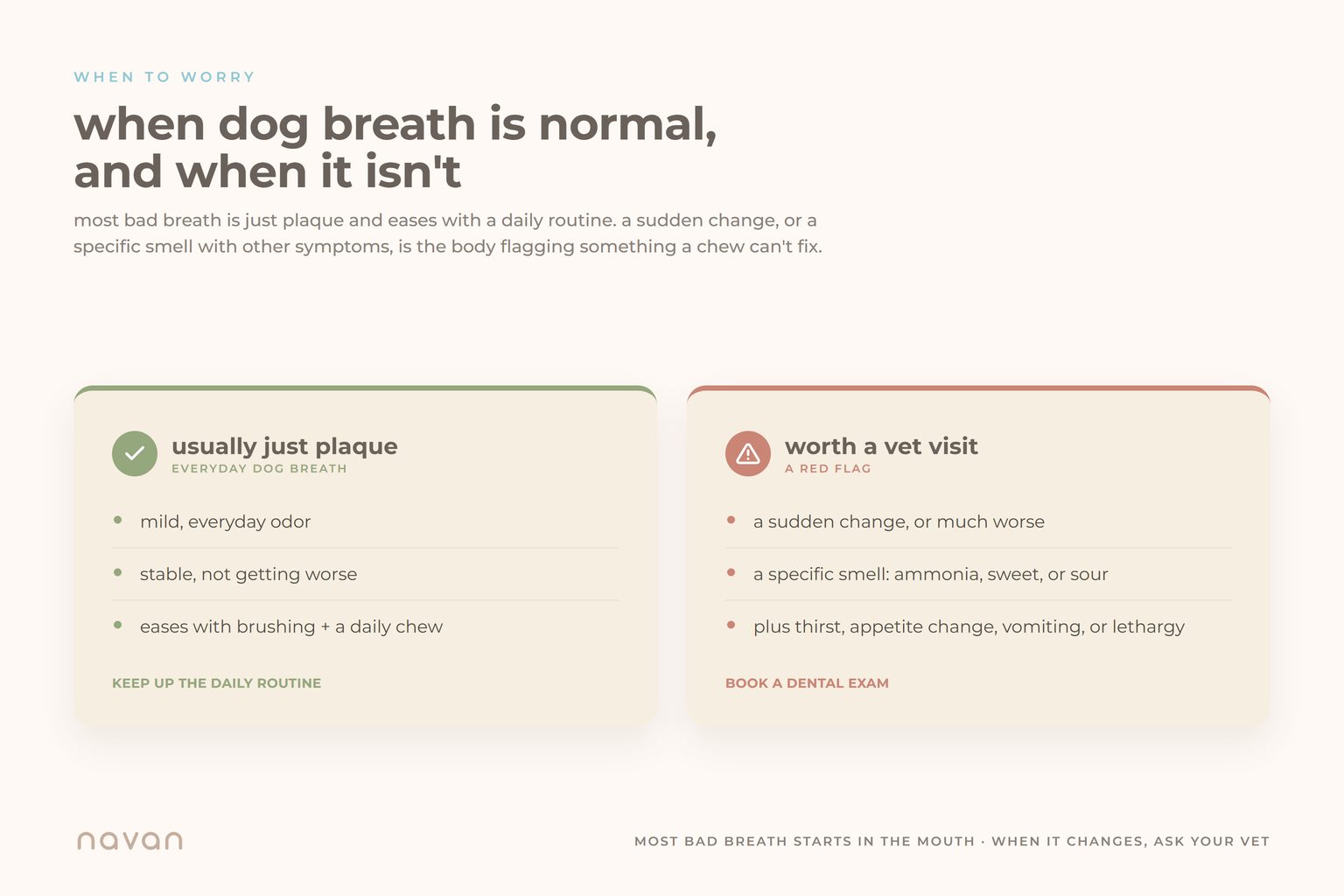
Ordinary plaque-driven breath is mild and fairly stable. Noticeable, not alarming, and it eases with a better dental routine. What's worth a call to the vet is a change: breath that turns suddenly worse, takes on a specific note like ammonia or sweetness, or arrives alongside increased thirst or urination, appetite loss, vomiting, weight loss, or lethargy. PetMD recommends a dental exam as the first step for any new or worsening bad breath, since it catches the most common cause before you assume something more serious.
| smell | possible cause | what to do |
|---|---|---|
| mild, everyday "dog breath" | early plaque buildup | daily brushing + a dental chew |
| strong, foul, or rotten | periodontal disease / gum infection | schedule a dental exam |
| ammonia or urine-like | possible kidney disease | vet visit + bloodwork |
| sweet or fruity (nail-polish-like) | possible diabetes (ketones) | vet visit promptly |
| sour, with vomiting or yellowing skin/eyes | possible liver disease | vet visit |
how do you get rid of bad dog breath?
start with the exam, then make it a daily habit.
- start with a dental exam. especially if the smell is new or has changed, a vet check rules out dental or systemic disease and catches the most common cause first.
- brush daily. brushing removes plaque before it hardens into tartar, which is when the odor really sets in.
- add a daily dental chew. a chew adds the scraping a toothbrush won't reach on the back teeth. look for one accepted by the Veterinary Oral Health Council, or at least one sized and textured for your dog's jaw.
- keep the professional cleanings. none of this replaces the cleanings your vet recommends. it supports the routine between them, which is where most of the plaque battle is won or lost.
for the everyday causes and simple home fixes, see why your dog's breath smells bad.
bad breath isn't just an inconvenience to manage around. it's information, and most of the time, it's telling you something you can actually do something about.

duck neck, 6 day supply
$35 one-time · from $29.75/mo on subscription
add to cart → live from shopify · price & stock always currentthe navan take
this is an awkward article for a chew company to publish, because most of its answers send you to a vet instead of a cart. we think that's the right trade. a smell that arrives with extra thirst, weight loss, or a sudden change in appetite is not a dental problem, and nothing we make will touch it. what we can speak to is the ordinary case, which is also the overwhelming majority: plaque, and the daily habit that keeps it from winning. knowing which one you're looking at is worth more than anything in our shop.
frequently asked
is bad breath in dogs a sign of illness?
what illnesses cause bad breath in dogs?
when should you worry about your dog's bad breath?
how do you get rid of bad dog breath?
not sure where to start?
build your dog's dental protocol in 60 seconds.
answer a few quick questions and we'll match the single-ingredient chews that fit your dog's size, mouth, and needs.
take the dental quiz →sources: American Veterinary Medical Association (periodontal disease affects nearly 80% of dogs by age three); American Veterinary Dental College (periodontal disease as the most common clinical condition in adult pets); PetMD (kidney disease, diabetes, and liver disease as causes of abnormal breath odor); Veterinary Oral Health Council (accepted home-care products).
want navan's latest guides and updates to reach you more often? add us as a preferred source on google.
add navan as a preferred source on google